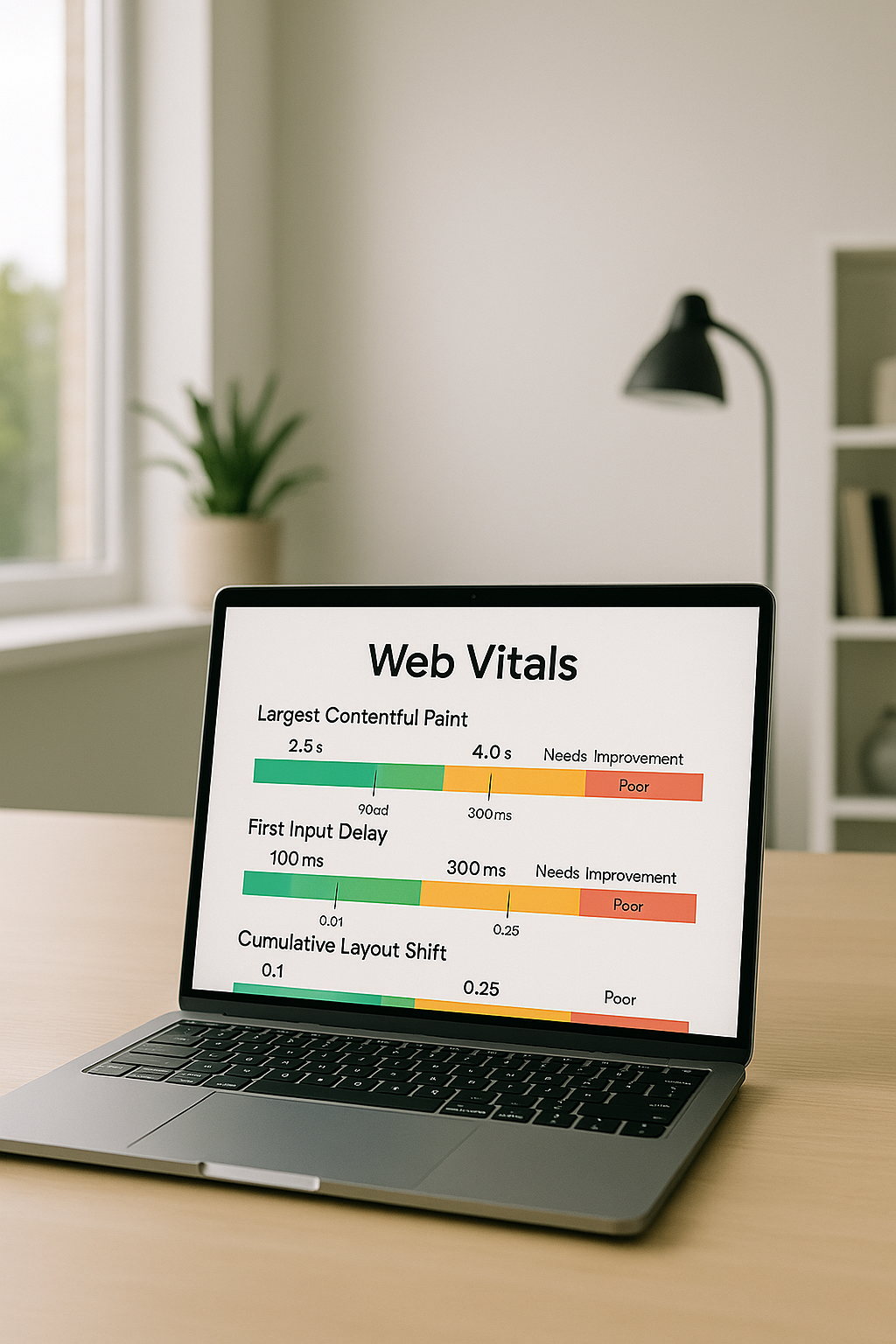
Understanding Web Vitals
In today’s digital landscape, Web Vitals optimization has become crucial for any digital marketing strategy aiming to improve site performance. Web Vitals are specific factors that Google considers important in a webpage’s overall user experience. They focus on aspects such as loading performance, interactivity, and visual stability, which significantly affect how users interact with your site.
The Three Core Metrics
- Largest Contentful Paint (LCP): Measures loading performance. A good LCP score is 2.5 seconds or less.
- First Input Delay (FID): Measures interactivity. A score under 100 milliseconds is ideal.
- Cumulative Layout Shift (CLS): Measures visual stability. A score of less than 0.1 is considered good.
The Importance of Web Vitals Optimization
With numerous sites vying for attention, optimizing for site speed and performance metrics is non-negotiable. A website that loads slowly not only frustrates users but can also lead to higher bounce rates. Moreover, search engines like Google reward sites that perform well in these metrics with higher rankings. Therefore, incorporating technical SEO strategies focused on Web Vitals can enhance your website’s visibility and user experience.
Measuring Your Current Performance
Before diving into optimization, it’s vital to assess where your site stands. Tools like Google PageSpeed Insights and Lighthouse can help you evaluate your site’s performance. These tools provide insights into how well your page satisfies the Web Vitals criteria and suggest actionable improvements.
Common Gaps in Optimization Strategies
Many businesses, especially SMEs, often overlook essential elements of Web Vitals in their optimization strategies. Here are some common mistakes:
- Neglecting Mobile Optimization: With more users accessing websites on mobile devices, ensuring that mobile versions of your site meet Web Vitals standards is crucial.
- Ignoring Image and Media Optimization: Unoptimized images and videos can significantly slow down your site. Use modern formats like WebP and implement lazy loading techniques.
- Failure to Leverage Caching: Proper caching strategies can drastically improve loading times for returning visitors.
Actionable Strategies for Improvement
To close the execution gap in your site performance strategy, consider the following tactics:
- Conduct Regular Audits: Frequently check your site’s performance metrics using PageSpeed Insights to identify areas for improvement.
- Optimize Content Delivery: Utilize a Content Delivery Network (CDN) to ensure that your site loads quickly for users across different geographical locations.
- Minimize JavaScript and CSS Blocking: Remove any render-blocking resources in your HTML to enhance the first contentful paint speed.
- Prioritize User Experience: A user-centered design approach can ensure that you’re meeting the needs of your audience while optimizing for search engines.
Conclusion
Bridging the execution gap in Web Vitals optimization is essential for anyone seeking to boost their site’s performance and user satisfaction. By focusing on the core Web Vitals, regularly measuring your performance, and implementing strategic improvements, you can significantly enhance the overall experience for your users. For businesses looking to leverage professional expertise in web design and optimization, exploring comprehensive services can provide substantial advantages in today’s competitive market.